Sunday, October 26, 2025

Detachment Is True Love

 Why Detachment Is True Love


What makes a mother-child relation so special? For a mother her child is a part of her soul. Her love for the child is truly unconditional. A mother never counts how much she gives for her child. Like the Sun provides light for Earth, a mother always loves her child. True love never depends on situations or things. Attachment always controls, always brings pain. That’s why detachment is the true form of love.


To be frank, for many people detachment means being cold. Not understanding the feelings of others, not caring others or being selfish. Because of this misunderstanding, they think if they feel any negative feelings such as stress, worry or disappointment all people who love them should worry along with them. They believe so because they are attached to their relatives and loved ones. They believe those who love them truly should worry for them when they face any adversity. 


See, when you face a problem do you want someone who brings a solution or who fears along with you? What’s the point in getting one more person to worry, complain or stress when facing a problem? It’s an absolute waste of time. When you face a problem you need a person who can encourage you, give you hope and have the capacity to bring the right solution for you. Because that’s what someone who truly loves you will do.


True love never controls. True love never set rules. True love never stops anyone from being their unique character. To reach that level your mind should be detached from the mind of everyone you love. When you reach that state you can remain calm even when your loved one faces a disturbed mind. As you remain calm, you could be able to give encouragement, hope and the right solution for your loved one. 


Ask yourself how stupid is the idea of - if you love me, you should obey all my rules. That kind of thinking only comes from meaningless attachment. That’s not true love. Genuine love and loyalty, built by allowing someone to be their best version. When you only hope for the continuous growth of your loved ones all your actions and behaviors are backed up by strong positive vibes. Nobody in the whole world can ignore such a genuine expression of love. Nobody wants to walk away from such a person. 


It’s not giving a luxurious gift that counts as a true expression of love. Material things can make someone’s life more comfortable. But to have someone who always gives them hope, encouragement and inspiration give them the true joy of life.  


When you find joy in loving someone without expecting anything in return you would enjoy the most joyful feeling in the world. You don’t have to compromise your time or hard earned money for nothing. To be precise emotional support is the foundation of all strong relations. That’s exactly you want to give. When you do this without expecting anything in return you are actually strengthening your relationship again. 


Just think about how beautiful your relationship becomes when you are detached from another's mind. Just don't waste the rest of your life by being emotionally attached to relations. Be a giver, give emotional support in your relations without expecting anything in return. Because detachment is the true love, always has been and always will. 


Tuesday, October 14, 2025

posts


jung personality

 Psychological types and personality analysis

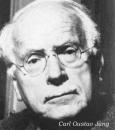
Jung questioned how such divergent views as Freud's, Alfred Adler's and his own could develop out of Psychoanalysis. The result of his questionings was Psychological Types (volume 6 of the Collected Works), in which Jung outlines a framework within which psychological orientations can be identified. The now much misunderstood terms 'extravert' and 'introvert' derive from this work. In Jung's original usage, the extravert orientation finds meaning outside the self, in the surrounding world, whereas the introvert finds it within. Jung also identified four modes of experience, four functions: thought, feeling, sensation, and intuition. Broadly speaking, we tend to work from our most developed function, and we need to widen our personality by developing the others. In addition, the unconscious often tends to manifest through the inferior function, so that encounter with the unconscious and development of the inferior function(s) can tend to progress together. The four functions may be extraverted or introverted. This model has been amended by some subsequent analytical psychologists. Myers-Briggs Type Indicator tests were inspired by Jung's Psychological Types theory.


jung unconscious


Carl Jung viewed the unconscious mind as a two-layered system: a personal unconscious for individual forgotten experiences and a deeper, universal collective unconscious containing inherited archetypes and primordial patterns shared by all humanityThese archetypes, such as the "hero" or "shadow," manifest in myths, symbols, and dreams and influence our behavior. Jung differed from Freud by not seeing sexuality as the sole root of the unconscious and by emphasizing the unconscious as a source of wisdom and guidance, integral to the process of individuationachieving psychological wholeness. 
Personal Unconscious
  • Contains: Memories, desires, and emotions that were once conscious but have been forgotten or repressed.
  • Function: An individual-specific layer of the unconscious that holds "feeling-toned complexes".
  • Similarity to Freud: It is Jung's equivalent to the Freudian concept of the unconscious. 
Collective Unconscious
  • Contains: 
    Universal, inherited structures and patterns of thought shared by all humans, which Jung called archetypes. 
  • Archetypes: 
    Primordial images and ideas like the mother, the hero, the shadow, and the anima/animus. 
  • Manifestation: 
    These archetypes appear in myths, dreams, and cultural symbols across different societies and influence human behavior. 
  • Inheritance: 
    It is not a repository of individual memories but a spiritual heritage born anew in the brain structure of every individual. 
Individuation
  • Definition: 
    The process of psychological development where an individual integrates the conscious and unconscious aspects of the self to achieve wholeness and self-realization. 
  • Method: 
    It involves confronting and reconciling conflicting aspects of the self and gaining true self-knowledge. 
  • Significance: 
    Jung saw the unconscious as a crucial source for guidance and wisdom, and this process of integration is central to Jungian therapy


DREAMS JUNG


Dreams are neither mere reproductions of memories nor abstractions from experience. They are the undisguised manifestations of unconscious creative activity.

Carl Jung viewed dreams as vital, spontaneous messages from the unconscious, revealing hidden truths, offering warnings, and guiding psychological growth toward wholeness or individuationHe saw dreams as "windows" into the unconscious mind, using symbols to portray the individual's actual inner situation and to balance the one-sidedness of conscious attitudes. Jung also introduced the concept of the collective unconscious, suggesting dreams can tap into universal archetypes and themes, connecting us to a shared layer of human experience.  

Key Aspects of Jung's Theory on Dreams:
  • Messages from the Unconscious: 
    Dreams are direct communications from the unconscious, providing essential guidance that the conscious mind might miss. 
  • Compensatory Function: 
    Dreams often serve to balance the conscious mind by bringing attention to neglected aspects of the self. For example, if a person is overly critical, their dreams might offer opportunities for self-compassion. 
  • Individuation: 
    Jung believed that paying attention to and interpreting dreams is crucial for personal development, a lifelong process of integrating unconscious elements into conscious awareness to achieve psychological wholeness. 
  • Symbolic Language: 
    Dreams use symbols, not literal words, to communicate their messages. Interpretation involves reflecting on these symbols in the context of the individual's life. 
  • Collective Unconscious: 
    Some dreams tap into a shared, universal layer of the psyche, containing primordial images or archetypes that appear in myths and fairy tales across cultures. 
  • Truth-Telling Oracles: 
    Jung called dreams "truth-telling oracles" that expose hidden realities, blind spots, and self-deceptions, and can even provide early warnings about physical health issues. 
How Jung Recommended Approaching Dreams:
  1. Record Dreams: 
    Write down dreams immediately upon waking to capture them before they fade. 
  2. Amplify the Dream: 
    Reflect on the dream's content, associating memories, ideas, and feelings with the dream's images. 
  3. Contextualize: 
    Consider the personal meaning of the dream's symbols and how they relate to the dreamer's current life situation. 
  4. Look for Archetypal Patterns: 
    For particularly profound dreams, consider if they connect to universal archetypes from mythology and religion

Thursday, October 9, 2025

More on self awareness


The art of shifting our focus from what is happening outside to what is happening inside of us is self awareness. Within us we find thoughts, emotions and physical sensations. For example if I can become aware of my fear fully in a fearful situation I am self aware. Most of us tend to shut out our fear and lash out at the situation causing our fear or we try to run away from it. Another example is to wait till we feel quite hungry before we eat. Then we can stop eating the moment our hunger disappears, even if we had just had only one mouthful. Trying to be aware of the emotional triggers for every action within us is a good way of becoming self aware


Divine grace necessary to suceed


Self-awareness can only reach the Ultimate Self provided it is helped by that message from the Divine Intellect which is called 'revelation' or tradition in its universal sense. 


The gates through which the Spirit has

descended to the level of the human self are hermetically sealed and protected by the dragons which cannot be subdued save with the help of the angelic forces. 


Self-awareness in the sense of experimenting with the boundaries of the psyche, with new experiences, with the heights and depths of the psychological world, does not result in any way in moving closer to the proximity of the Self.


The attempted expansion ofawareness in this sense ,

which is so common among modern man anxious to break the boundaries of the prison of the materialistic world he has created for himself, results only in a horizontal expansion, but not in a vertical one. 

Its result is a never ending wandering in the labyrinth of the psychic world and not the end of all wandering in the presence of the Sun which alone is.Only the sacred can enable the awareness of the self to expand in the direction of the Self. 


The Divine reveals to man his Sacred Name as a holy vessel which carries man from the limited world of his self to the shores of the World of the Spirit where alone man is his Real Self. 


That is why the   Sufi, Mansuir al-Hallaj, through whom the Self uttered 'I am the Truth' (ana'l Iaqq) prays in this famous verse to the Self to remove the veil which separates man's illusory I from the Self who alone is I in the absolute sense. '

“Between me and thee, it ismy "I-ness "which is in contention; Through Thy grace remove my "I-ness" from between us.”


the perfection of the self implies first of all the negation of itself, a death which is also a rebirth, for only he who has realized that he is nothing is able to enter unto the Divine Presence. The only thing man can offer in sacrifice to God is his self, and in performing this sacrifice through spiritual practice he returns the self to the Self and gains awareness of the real 'I' within, who alone has the right to claim 'I am'. 


As Rumi has said

in these celebrated and often quoted verses concerning the real 'I' 

I died as mineral and became a plant, I died as plant and rose to animal,


I died as animal and I was Man.

Why should I fear? When was I less by dying?

Yet once more I shall die asMan, to soar With angels blest; but even from angelhood

Imust pass on: all except God doth perish. When I have sacrificed my angel-soul,

I shall become what no mind e'er conceived. Oh, letme not exist! forNon-existence

Proclaims in organ tones: "To him we shall return".


Self-Awareness Activities & Tools


Key Insights

15 minute read
  • Building self-awareness involves understanding your thoughts, emotions & behaviors to enhance personal growth & decision-making.
  • Activities like journaling, mindfulness & feedback from others can deepen self-insight & highlight areas for improvement.
  • Developing self-awareness leads to better emotional regulation, improved relationships & greater overall wellbeing

1)A thought diary is a foundational place to begin increasing self-awareness.

To be more efficient, the thought diary should be less of an emotional exercise and more of a fact-finding mission. In other words, leave judgment out of it.

2)Starting a mindfulness practice 

When mindfulness is practiced, behavior becomes more intentional, and increased self-awareness developed


Asking a friend to clarify your strengths and weaknesses can be a significant pathway to self-awareness.


Sunday, October 5, 2025

Dementia


Dementia is a general term that represents a group of diseases and illnesses that affect your thinking, memory, reasoning, personality, mood and behavior. The decline in mental function interferes with your daily life and activities. It’s estimated that about 50% of people age 85 and older have dementia. Current medications may help slow the mental decline


Dementia

Bipolar


Here

Schizophrenia


Schizophrenia

Mental disorders


model. (October 2025)

A mental disorder, also referred to as a mental illness,a mental health condition, or a psychiatric disability, is a behavioral or mental pattern that causes significant distress or impairment of personal functioning.


A mental disorder is also characterized by a clinically significant disturbance in an individual's cognition, emotional regulation, or behavior, often in a social context.

 Such disturbances may occur as single episodes, may be persistent, or may be relapsing–remitting. There are many different types of mental disorders, with signs and symptoms that vary widely between specific disorders.

A mental disorder is one aspect of mental health.

The causes of mental disorders are often unclear. Theories incorporate findings from a range of fields.

 Disorders may be associated with particular regions or functions of the brain. 

Disorders are usually diagnosed or assessed by a mental health professional, such as a clinical psychologist, psychiatrist, psychiatric nurse, or clinical social worker, using various methods such as psychometric tests, but often relying on observation and questioning.

 Cultural and religious beliefs, as well as social norms, should be taken into account when making a diagnosis.

In 2019, common mental disorders around the globe include: depression, which affects about 264 million people; dementia, which affects about 50 million; bipolar disorder, which affects about 45 million; and schizophrenia and other psychoses, which affect about 20 million people.


 Neurodevelopmental disorders include attention deficit hyperactivity disorder (ADHD), autism spectrum disorder (ASD), and intellectual disability, of which onset occurs early in the developmental period.

 Stigma and discrimination can add to the suffering and disability associated with mental disorders, leading to various social movements attempting to increase understanding and challenge social exclusion